AI Agents vs AI Assistants: Key Differences Explained
Understand the difference between AI agents and AI assistants with real examples and practical use cases. Learn which tool fits your needs.
AI Agents vs AI Assistants: The Real Difference Explained (2026)
You've probably heard "AI agent" thrown around a lot lately in tech news, on LinkedIn, in startup discussions. But here's the thing—most people think it's just another fancy name for ChatGPT or Siri. They're not the same thing at all.
The confusion is totally understandable. Both sound intelligent. Both use AI. Both can help you. But they work in completely different ways, and that difference matters more than you'd think. Whether you're someone who just wants to understand what these terms mean, or you're running a business trying to figure out which one to use, nailing this distinction will save you time and money.
Let me be straight with you: I'm going to explain this in plain English. No jargon. No corporate fluff. Just the real difference, with examples you'll actually recognize.
What is an AI Assistant? (And What It Actually Does)
An AI assistant is pretty straightforward. It waits for you to ask it something, and then it responds. That's the core of it.
Think about ChatGPT. You open the app. You type a question. It answers. You ask for help writing an email. It writes one. You want to know how photosynthesis works. It explains it. The assistant is reactive—it responds to your prompts.
Or think about Siri. You say "Hey Siri, what's the weather?" Siri tells you. That's the entire conversation. Siri doesn't go out on its own to fetch weather data without you asking. It doesn't send you a notification at 7 AM saying "It's going to rain today, bring an umbrella." It waits for the command.
Here are some real AI assistants you've probably used:
- ChatGPT / Claude – You ask questions, they generate answers. Great for writing, brainstorming, coding help, explaining concepts.
- Siri (Apple) – Sets reminders, plays music, checks weather, all on voice command.
- Google Assistant – Similar to Siri. Responds to voice commands and questions.
- Grammarly – Suggests edits to your writing. You still have to accept or reject them.
- Copilot (Microsoft) – Helps with search, answering questions, writing assistance within Microsoft products.
All of these share a key trait: they're designed to respond to your input. You initiate. They respond. The conversation stops when you're done asking.
And honestly? For a lot of everyday stuff, this is perfect. You need help writing something. You ask. You get an answer. Done.
But here's where it gets interesting: there's a whole different category of AI that doesn't wait around for your input. It acts on its own.
What is an AI Agent? (The One That Actually Does Stuff)
An AI agent is fundamentally different in one crucial way: it can take action without waiting for you to tell it what to do at every step.
This is where things get wild. Instead of you saying "Do step 1, step 2, step 3," you give an agent a goal, and it figures out the steps, takes the actions, and keeps working until it's done. Even when you're not watching. Even while you sleep.
Let me give you a concrete example to make this real.
A Real-Time Example: Booking a Flight
Scenario: You want to fly from London to Paris next Friday.
What a traditional AI assistant does:
You tell ChatGPT: "Help me find a flight from London to Paris next Friday."
ChatGPT responds: "Here are some options you might consider. You could check Skyscanner, Kayak, or Expedia. Look for flights departing between 8 AM and 6 PM. Consider whether you want a direct flight or don't mind a connection. Here are some airlines that fly this route..."
Now what? You have to actually go to Skyscanner, plug in the dates, check prices, compare airlines, check your company travel policy, check seat availability, get it approved by your manager, then book it. ChatGPT basically talked to you about it. But it didn't actually do it.
What an AI agent does:
You tell the agent: "Book me a flight from London to Paris next Friday, departing between 9 AM and 5 PM, budget under £300, and I need it approved by my manager first."
The agent then:
- Connects to flight search systems (Skyscanner, Kayak, airline APIs)
- Checks available flights matching your criteria
- Compares prices across multiple airlines
- Verifies your company travel policy (maybe it pulls this from your company's system)
- Sends an approval request to your manager
- Waits for approval
- Completes the booking once approved
- Syncs the booking to your calendar
- Sends you a confirmation email
You didn't have to do any of those steps manually. The agent did all of it. It reasoned through the problem, coordinated with multiple systems, and completed the entire task.
This is happening right now in the real world. Malaysia Airlines launched "Mavis," an agentic AI customer service agent that autonomously handles travel queries and booking tasks across web, app, and email, marking a shift from basic chatbots to AI agents that can act on real airline systems.
Another real example: Sabre, PayPal, and MindTrip are building the travel industry's first end-to-end agentic AI booking pipeline, combining conversational AI trip planning, real-time travel inventory (420+ airlines, 2M hotels), and integrated payment into a single chat-based experience.
These aren't hypothetical. These are live systems handling real bookings in 2026.
The Key Differences Broken Down
Let's look at this side by side so you really see the gap:
| Aspect | AI Assistant | AI Agent |
|---|---|---|
| How it starts | You ask a question or give a command | You give it a goal or objective |
| Autonomy | Waits for your input at every step | Works independently toward the goal |
| Action capability | Generates responses; can't execute tasks directly | Executes multi-step tasks, integrates with systems |
| Decision-making | Provides options/suggestions; you decide | Makes decisions based on rules and context you set |
| Persistence | Stops when conversation ends | Continues working until task is complete |
| Memory | Limited to current conversation | Can remember context over time and across conversations |
| Best for | Answering questions, writing, brainstorming, explaining concepts | Automating workflows, booking, managing processes, handling disruptions |
| Example | ChatGPT drafting an email for you to send | An agent that sends the email, updates the spreadsheet, and notifies the recipient |
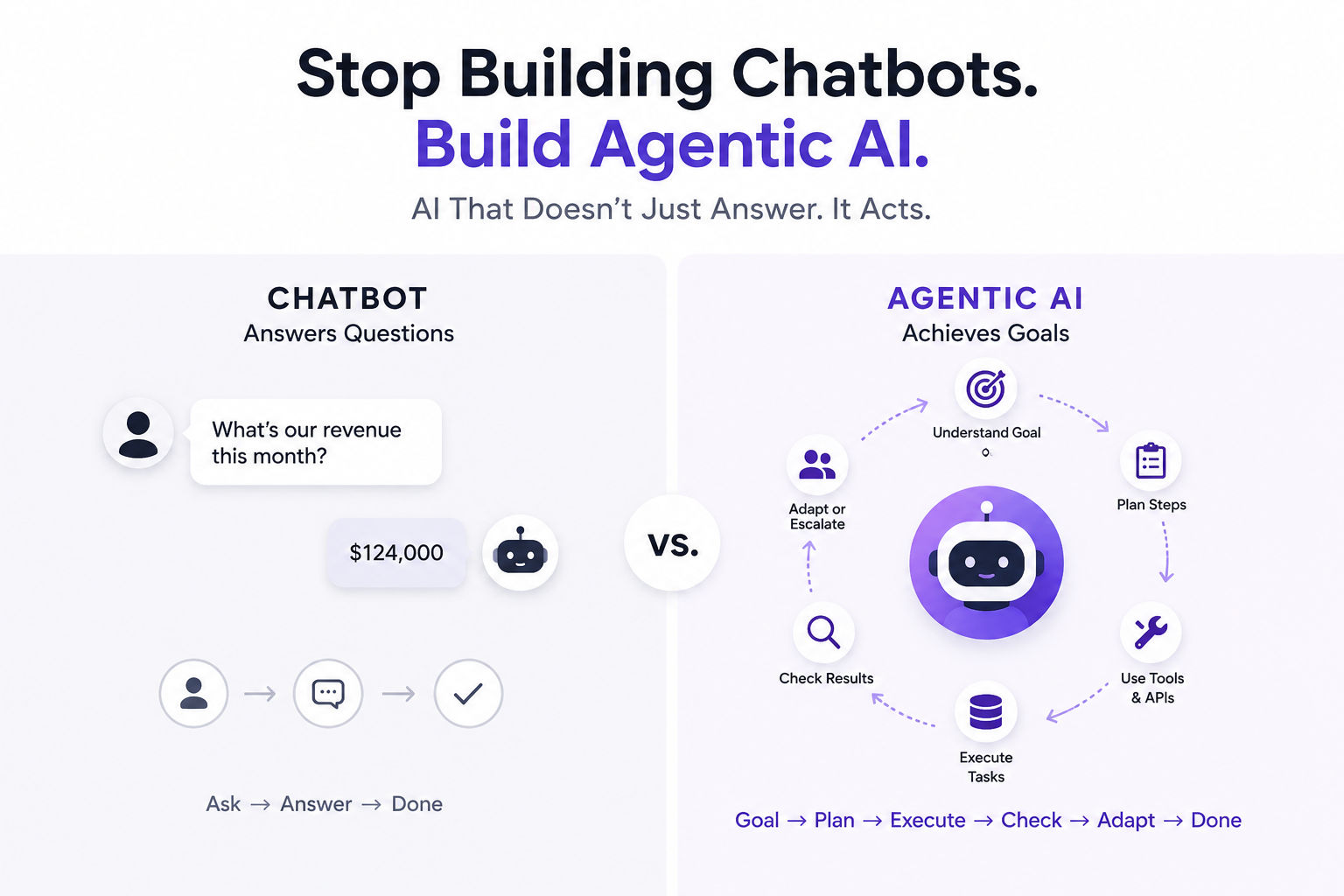
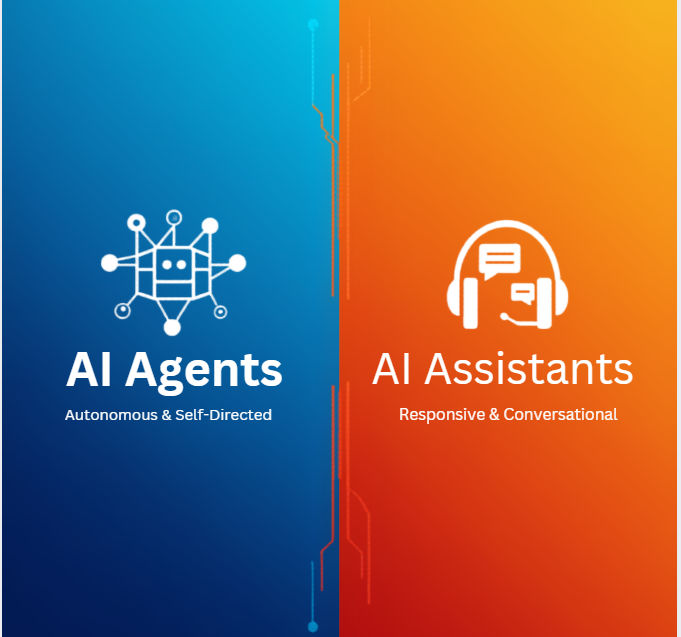
The easiest way to think about it: A chatbot is a conversational tool. An agent is an autonomous worker.
Real-World Examples You've Probably Already Encountered
Let me give you a few more examples that hit different use cases, because understanding where agents are already working helps clarify the distinction.
Example 1: Customer Service in Travel
You book a flight. A few days before departure, the airline cancels your flight due to bad weather.
With a traditional chatbot assistant: You call the airline, explain the situation, wait on hold, get transferred, and a human agent helps you rebook or get a refund.
With an AI agent: An AI customer service agent evaluates the booking, checks fare eligibility, identifies policy-aligned alternatives, applies travel credits if eligible, and presents next-best options. The agent can handle this without a human touching the case.
Expedia has rolled out an AI-powered service agent designed to handle booking changes, cancellations and customer support issues within a single interaction. According to the company, the agent can resolve problems that previously required multiple handoffs across search, service and checkout.
This is the difference between "an AI that explains your options" and "an AI that actually fixes your problem."
Example 2: Sales and Business Operations
An AI assistant can help you draft a sales email, explaining best practices for subject lines and opening hooks.
An AI agent can: Take multi-step actions on its own toward a goal, automatically evaluate results, adjust strategies, and continue working toward objectives without being prompted each step of the way. Organizations already using these systems report gains in three key areas: productivity increases, cost reductions, and shorter innovation cycles.
Real agents in sales environments can qualify leads, send personalized outreach, track responses, update your CRM automatically, and flag hot leads for your team.
Example 3: Healthcare Support
Regina Maria, a major EHR provider, reduced its support response time from hours to instant by deploying AI agents that assist users with software navigation, generate tickets, and offer 24/7 help powered by 1,300+ knowledge base articles.
An assistant can answer general questions about how to use software. An agent can actively navigate the software, create support tickets, escalate to humans when needed, and keep working around the clock.
Why This Distinction Actually Matters
I know what you might be thinking: "Okay, cool, but does this really matter to me?"
Actually, yes. Here's why:
1. It changes how you expect AI to solve problems
If you're trying to automate something in your business but you're only using an assistant, you're going to be disappointed. Assistants don't execute tasks. They explain things. Agents actually do the work.
The difference is like hiring someone to be your coach versus hiring an employee. A coach gives advice. An employee gets work done.
2. It affects privacy and control
When an agent acts on your behalf—like booking a flight or sending emails—you're giving it real authority over your accounts and systems. That's a bigger deal than an assistant generating text. You need to know who's doing what, and you need proper safeguards.
3. It determines ROI in business
Gartner predicts that 40% of enterprise applications will include task-specific AI agents by 2026, up from less than 5% in 2025, a sign that agent-based systems are moving rapidly from experimentation into production environments.
For companies, the productivity gains from agents are staggering because they handle entire workflows, not just assist with individual tasks. That's how you see real cost reduction and speed improvement.
4. It shapes what's coming
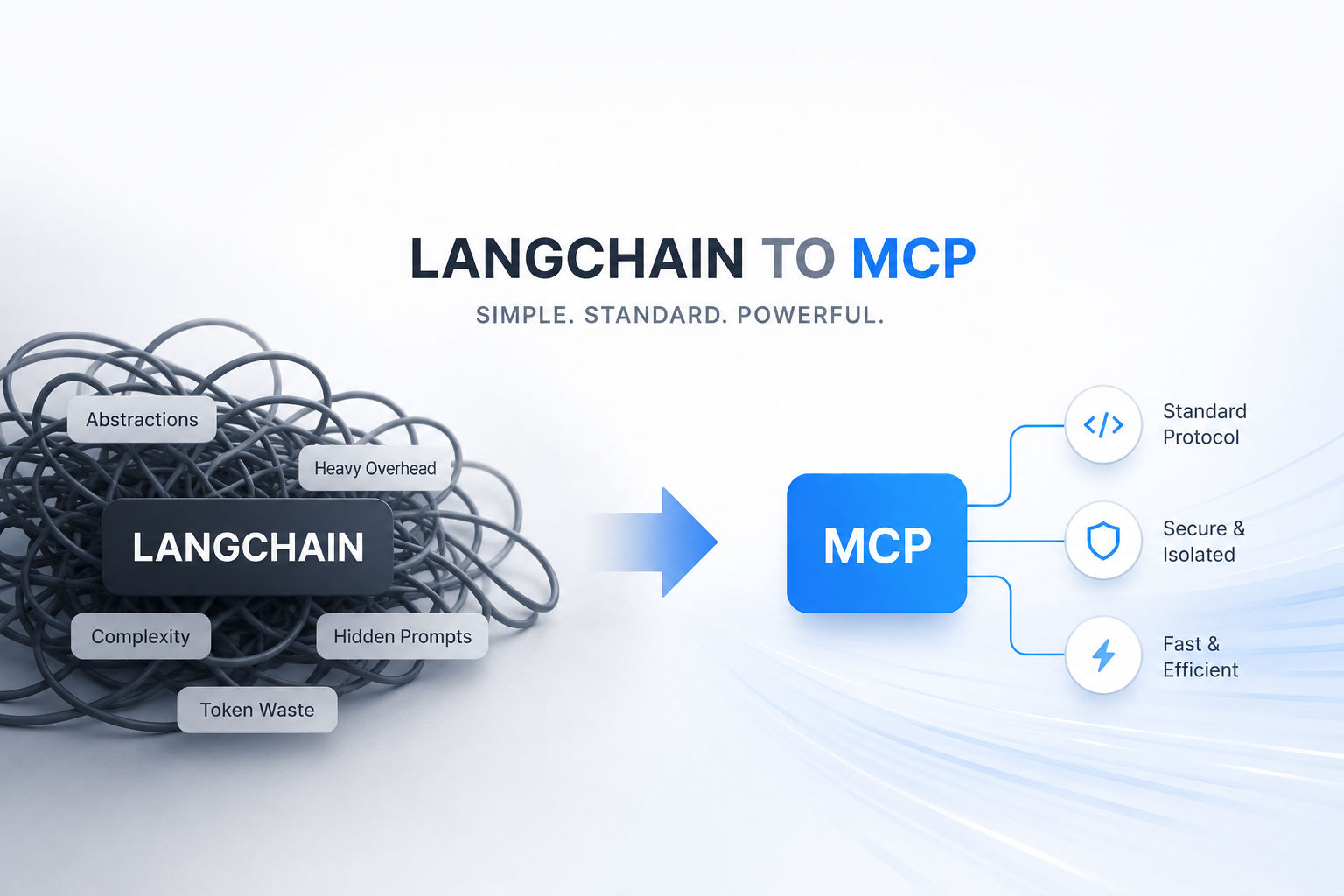
We're in the middle of a massive shift. AI agents moved from theory to infrastructure in 2025, reshaping how people interact with large language models. A key inflection point came in late 2024, when Anthropic released the Model Context Protocol, which allowed developers to connect large language models to external tools in a standardized way, effectively giving models the ability to act beyond generating text.
Understanding the difference now puts you ahead of the curve. You'll know what tools to use, what to expect from AI, and where the real opportunity lies.
FAQ: Questions People Actually Ask
Let me answer the most common questions I see online about this topic, because people get genuinely confused about this stuff.
Q: Is ChatGPT an AI agent?
A: No. ChatGPT lacks autonomy, persistent goals, and independent action-taking. It cannot initiate tasks or interact with environments on its own, making it an AI assistant rather than a true AI agent.
However, it's getting more agent-like. OpenAI has released ChatGPT Agent, which lets ChatGPT use tools and take actions. But vanilla ChatGPT? Still an assistant.
Q: What about Claude or Gemini? Are they agents?
A: By default, no. They're powerful assistants. But they can be configured to work as agents when connected to the right tools and frameworks. The recent change is the expanding capacity of large language models to act, using tools, calling APIs, coordinating with other systems and completing tasks independently.
This happened because developers figured out how to hook them up to external systems. The model itself is still an assistant, but with agent capabilities bolted on.
Q: Can an AI agent replace my job?
A: Depends on your job, but probably not completely. The industry moved beyond standalone generative models toward agentic systems capable of executing tasks, coordinating workflows, and operating with limited human supervision. What changed was not just capability, but structure.
Agents are really good at routine, multi-step workflows. They're terrible at things that require judgment calls, creativity, client relationships, or understanding nuance. What's more likely is that agents will handle repetitive parts of your job, freeing you up for higher-value work.
Q: Who should care about this distinction right now?
A: Everyone, but for different reasons.
- Business leaders: You need to understand that agents aren't just better assistants. They're different tools that unlock different kinds of automation and ROI.
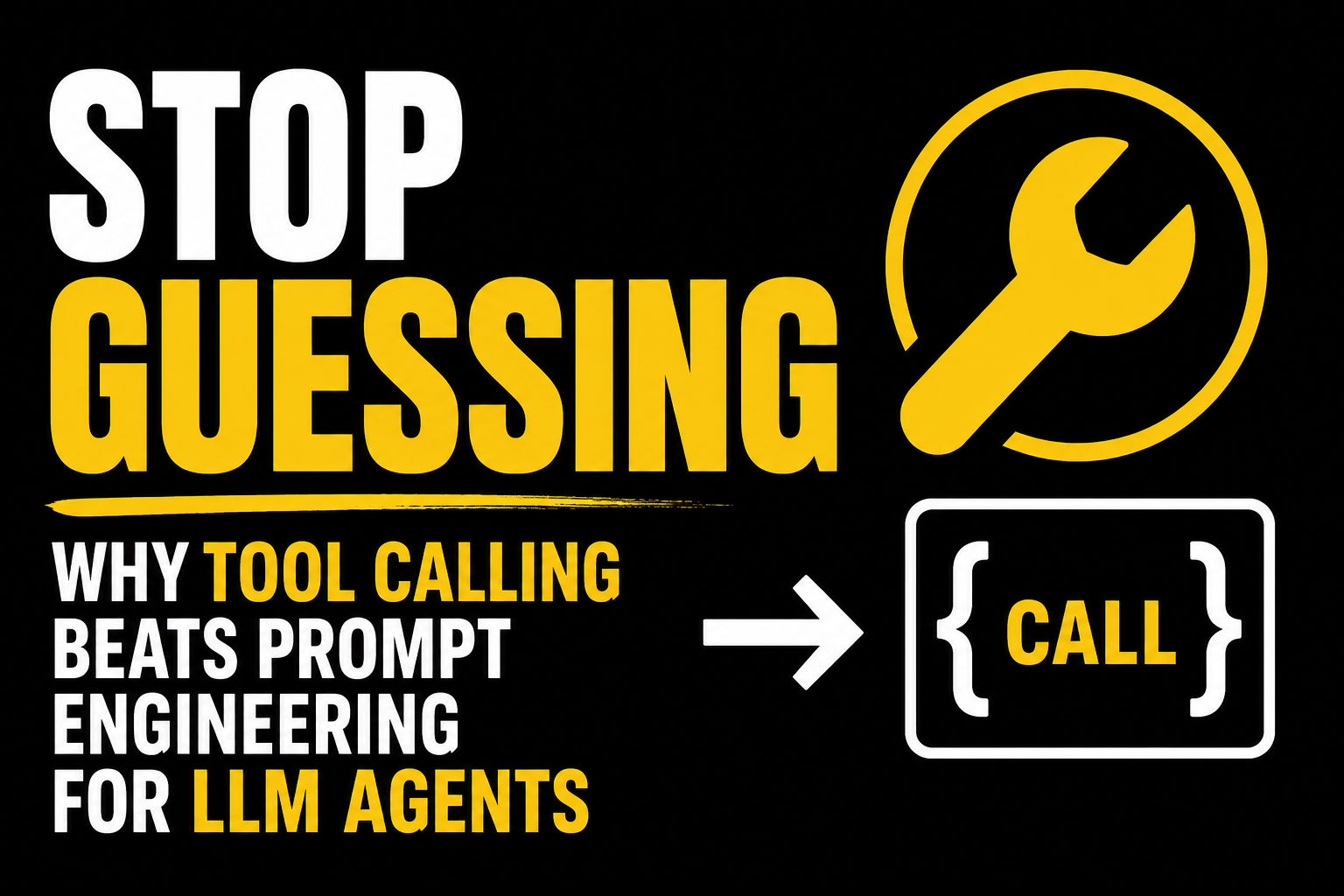
- Developers: You need to know which framework you're building on. If you're building a Q&A system, an LLM is fine. If you need end-to-end task automation, you need agentic architecture.
- Regular users: Knowing the difference helps you set realistic expectations. If you're trying to automate something and you keep hitting a wall with ChatGPT, you probably need an agent, not just a better prompt.
Q: Are there any downsides to AI agents?
A: Yes. Because agents act autonomously, they can cause problems if they're given the wrong permissions or unclear instructions.
For example, imagine you give an AI agent access to your company's code repository and tell it to "fix bugs." If it's not carefully constrained, it could delete important code, create security vulnerabilities, or break things in ways that take days to fix.
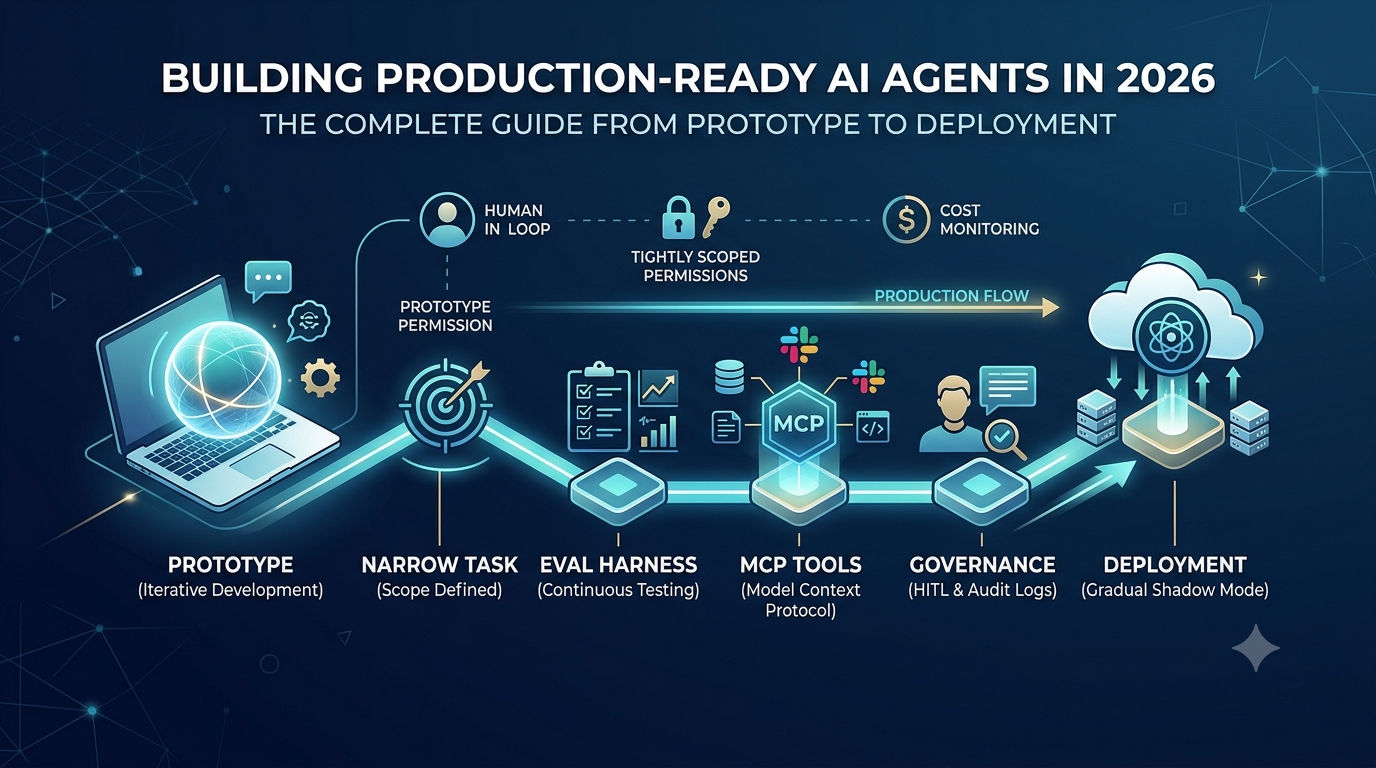
Real security comes from giving the agent only the minimum permissions it truly needs. If MCP allows undesirable actions—deleting code, modifying the repository—you can be sure they will eventually happen.
This is why enterprise deployments of agents are so careful about access control and governance. Most enterprise deployments still include human-in-the-loop controls to manage risk and maintain accountability.
Q: What's the difference between an AI agent and a bot?
A: Bots are even more rigid than assistants. A bot follows pre-programmed rules. An assistant responds intelligently. An agent reasons and adapts.
Think of it like: Bot = if/then automation. Assistant = intelligent responder. Agent = autonomous worker.
Q: Where do I actually see agents being used right now?
A: More places than you'd think. 800 million active OpenAI users as of April 2025, and by year-end, agents are expected to handle 20% of e-commerce tasks—potentially hundreds of billions of dollars in transactions.
Beyond travel and e-commerce, agents are being deployed in:
- Legal tech: Reviewing documents, flagging risks, preparing summaries
- Financial services: Trading, fraud detection, client portfolio management
- Healthcare: Patient scheduling, test result analysis, medication management
- Customer support: Resolving issues, escalating when needed
- Software development: Writing code, testing, debugging in continuous loops
The Takeaway
Here's what you need to remember:
AI assistants respond to you. You ask, they answer. They're amazing at helping you think through problems, write better, understand concepts, and get things done faster. Use them for that.
AI agents work for you. You set a goal, they execute it. They're built for automating workflows, handling multi-step processes, and making decisions within boundaries you set. Use them when you need autonomous task completion.
The line between them is blurring as assistants get agent capabilities, but the core distinction holds. And understanding it will help you figure out what tools you actually need, what you should expect from them, and where the real opportunities lie in 2026.
The future isn't about AI that talks to you better. It's about AI that works for you smarter. And that requires understanding the difference between someone you chat with and someone you can actually delegate to.
Last updated: June 2026. This article reflects the state of AI agent technology as of early 2026, including real deployments and current industry trends.
CS student and builder writing about tech, startups, AI, and productivity. Built a SaaS that didn't ship — walked away with real product experience instead. Sharing everything learned along the way.