LangChain vs MCP: Why Developers Are Making the Switch
Compare LangChain and MCP for AI development. Learn the performance, security, and architecture differences with real migration strategies and code examples.
The Great Migration: Moving from LangChain to Native MCP
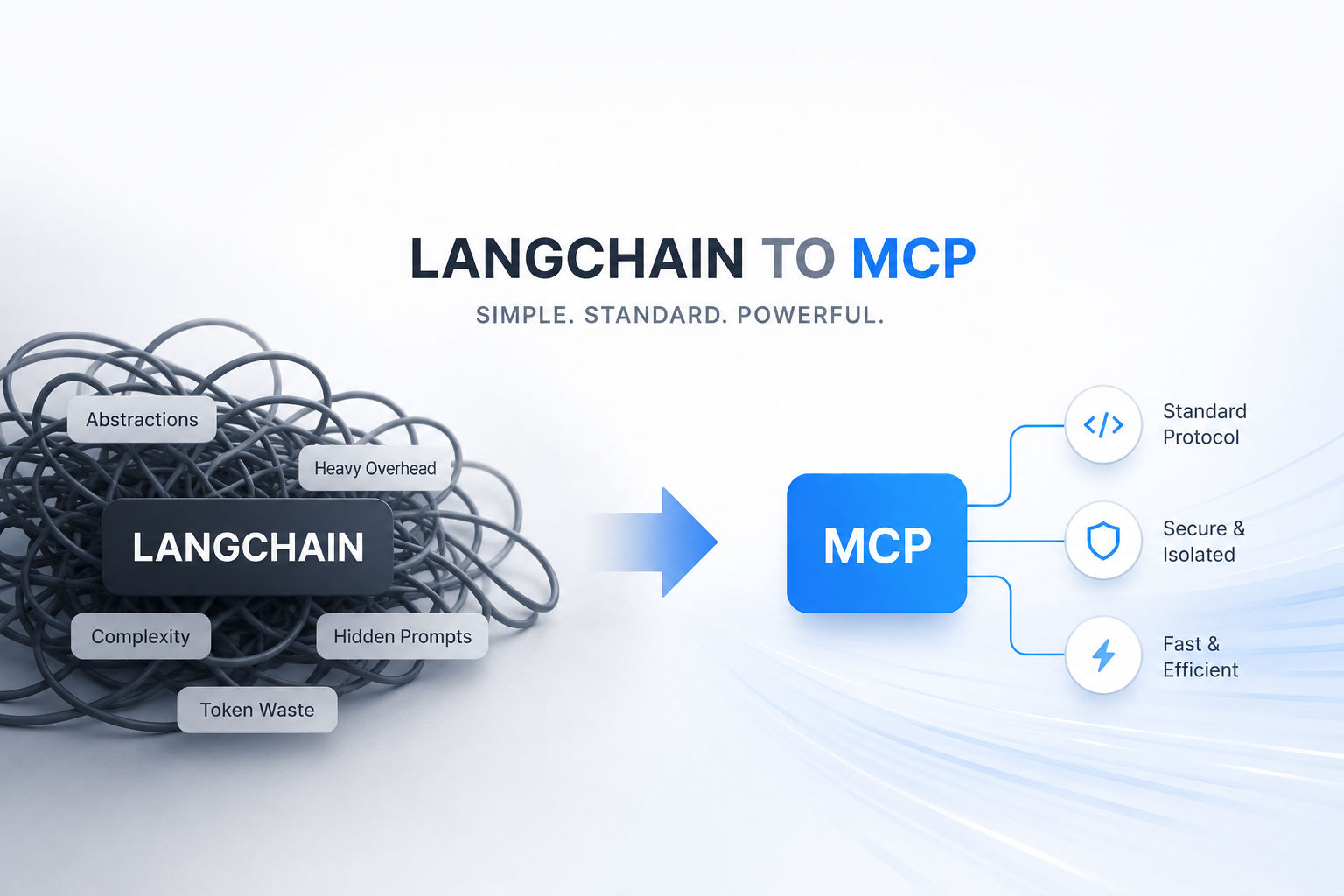
The LLM framework landscape shifted in late 2024. What started as a convenient abstraction layer became a liability—developers shipping production agents realized they were paying a massive hidden cost: bloat, complexity, and fragility wrapped inside LangChain's heavyweight orchestration.
Then Anthropic announced the Model Context Protocol (MCP) in November 2024 as an open standard for connecting AI assistants to data systems, and the conversation changed overnight. Twelve months later, MCP has become the de facto protocol for tool integration across Claude, ChatGPT, and enterprise deployments. The question isn't whether to migrate anymore. It's how.
This isn't a theoretical comparison. It's a structural breakdown of why developers at scale are ripping out LangChain and rebuilding on native MCP—and why that decision makes sense for teams shipping in 2026.
The Bloat Crisis: Why LangChain Became the Problem It Tried to Solve
When LangChain launched in early 2023, it solved a real problem. Developers needed a vocabulary for chaining models, managing memory, and coordinating tool calls. It was brilliant scaffolding for prototyping.
But scaffolding was never meant to be load-bearing.
The reality in 2025 is harsh: LangChain may not be ideal for enterprise-level deployments due to performance bottlenecks created by its abstraction layers. That's corporate speak for "it's slow and hard to debug."
Here's what teams actually experience in production:
1. Abstraction Overhead That Never Goes Away
LangChain wraps everything—models, tools, memory, state management—in framework-specific abstractions. This means:
- Error messages point to internal framework components instead of your code
- Debugging requires tracing through multiple layers to find the real issue
- Hidden prompts and internal logic consume tokens before your agent even starts reasoning
One developer measured 45,000–50,000 tokens burned on tool definitions alone before a LangChain agent processed a single user message. That's your context window gone before the conversation begins.
2. Version Hell and Breaking Changes
LangChain's rapid development pace led to frequent breaking changes and version incompatibilities throughout 2023, with interfaces being a moving target. The framework was released as LangChain 1.0 in October 2025 specifically to address this. That means teams spent years building on unstable foundations—and many still are.
3. The Heavy Dependency Chain
LangChain pulls in dozens of dependencies. Each one is another potential conflict, another point of failure, another package to audit for security vulnerabilities. This bloat affects maintainability and performance—in legacy or constrained environments, LangChain's heavy dependency chain can be overkill.
For a chatbot that just needs to call a database? You're shipping an entire kitchen when you need a fork.
4. Context Window Thrashing
LangChain agents serialize tool definitions, agent state, conversation history, and memory into the context window. As your system scales, you're not paying for reasoning—you're paying for framework overhead. Developers measured over 50,000 tokens burned on MCP tool definitions before processing a single user message when adapting between frameworks.
Why MCP Is Winning the Architecture War
Model Context Protocol (MCP) is an open protocol that enables seamless integration between LLM applications and external data sources and tools through a standardized interface.
That's the official definition. Here's what it actually means:
MCP acts like a dead-simple client-server protocol for AI tools—think HTTP for function calling.
The architecture is elegant because it separates concerns:
- MCP Client (your application or agent) communicates with the LLM
- MCP Server (lightweight service) exposes tools, resources, and data
- The Protocol (standardized JSON-RPC 2.0) handles the conversation
No abstraction layer. No hidden prompts. No framework making decisions for you.
MCP is model-agnostic and platform-neutral—by 2025 it was natively supported not just by Anthropic's Claude, but also OpenAI's ChatGPT, Google DeepMind's systems, Microsoft's Copilot, and many others. This means your MCP servers work with any LLM. Your tool integrations aren't locked to a framework.
Before MCP, connecting M different AI applications to N different data sources often meant writing M×N bespoke connectors and plugins—a combinatorial explosion of integration work. MCP eliminates this tangle by defining a single protocol on both the client side (AI application) and server side (data/tool connector).
The adoption numbers tell the story. Within just a few months (by February 2025), over 1,000 community-built MCP servers were available, showcasing how eager developers were to connect AI agents with everything from code repositories to SaaS apps. By 2026, MCP has achieved 97M+ monthly SDK downloads with backing from Anthropic, OpenAI, Google, and Microsoft, with over 5,800+ MCP servers and 300+ MCP clients now available.
That's not hype. That's infrastructure becoming standard.
The Practical Blueprint: Before vs. After
Let's get concrete. Here's what the migration looks like in real terms.
Before: The LangChain Mess
1from langchain.agents import initialize_agent, AgentType
2from langchain.memory import ConversationBufferMemory
3from langchain.tools import Tool
4from langchain.llms import ChatOpenAI
5
6# Define tools (framework-locked, heavy serialization)
7tools = [
8    Tool(
9        name="read_file",
10        func=lambda file_path: read_file(file_path),
11        description="Read file data"
12    ),
13    Tool(
14        name="search_docs",
15        func=lambda query: search_docs(query),
16        description="Search documentation"
17    )
18]
19
20# Manage memory (another abstraction layer)
21memory = ConversationBufferMemory(
22    memory_key="chat_history",
23    return_messages=True
24)
25
26# Initialize agent (verbose setup, hidden overhead)
27agent = initialize_agent(
28    tools=tools,
29    llm=ChatOpenAI(model="gpt-4"),
30    agent=AgentType.OPENAI_FUNCTIONS,
31    memory=memory,
32    verbose=True
33)
34
35# Run the agent
36response = agent.run("Find and summarize the main points")
What's happening behind the scenes:
- Tool definitions get serialized and injected into every message to the LLM
- Memory management adds its own serialization logic
- Agent state, reasoning, and tool calls all flow through the framework
- Debugging errors requires tracing through abstraction layers
- Switching models requires reconfiguring the entire chain
After: Native MCP
1import json
2from anthropic import Anthropic
3
4client = Anthropic()
5
6# MCP servers expose tools dynamically (no framework lock-in)
7tools = [
8    {
9        "name": "read_file",
10        "description": "Read file data",
11        "inputSchema": {
12            "type": "object",
13            "properties": {
14                "file_path": {"type": "string"}
15            },
16            "required": ["file_path"]
17        }
18    },
19    {
20        "name": "search_docs",
21        "description": "Search documentation",
22        "inputSchema": {
23            "type": "object",
24            "properties": {
25                "query": {"type": "string"}
26            },
27            "required": ["query"]
28        }
29    }
30]
31
32# Direct LLM communication (no middleware)
33messages = [
34    {
35        "role": "user",
36        "content": "Find and summarize the main points"
37    }
38]
39
40# Claude handles tool execution directly via MCP
41response = client.messages.create(
42    model="claude-3-5-sonnet-20241022",
43    max_tokens=1024,
44    tools=tools,
45    messages=messages
46)
47
48print(response.content[0].text)
What's different:
- Tools are declared once, not serialized into every message
- No memory abstraction—you manage conversation state explicitly
- No agent wrapper—you control the reasoning loop
- Model-agnostic—switch to GPT-4, Gemini, or Claude with minimal changes
- Debugging is straightforward—you see exactly what the LLM receives
The difference isn't cosmetic. It's architectural.
[INSERT VISUAL: Timeline showing token consumption comparison—LangChain (50K+ overhead) vs. MCP (minimal protocol overhead)]
The Performance Payoff: What You Actually Gain
Faster debugging. Lower latency. Complete control. These aren't marketing claims—they're measurable improvements that teams are shipping with today.
1. Token Efficiency
LangChain serializes tool definitions, memory state, and agent metadata into every request. MCP declares tools once. One developer measured that MCP takes 1/10th the code compared to LangChain, which translates directly to fewer tokens and faster responses.
2. Reduced Context Window Pressure
With LangChain, your agent's reasoning share of the context window shrinks as framework overhead grows. With MCP, dynamic tool discovery means different agents see different tools, and tool availability is governed by policy, not code. Your reasoning gets the full context window.
3. Easier Sandboxing and Security
MCP servers run separately from your application. This isn't just an architecture pattern—it's a security boundary. Tools represent arbitrary code execution and must be treated with appropriate caution. In particular, descriptions of tool behavior such as annotations should be considered untrusted, unless obtained from a trusted server. MCP bakes this principle into the protocol.
With LangChain, tools are embedded in your application process. With MCP, they're isolated servers you can audit, update, and roll back independently.
4. Transparent Execution
LangChain agents make decisions inside the framework. You see the result, not the reasoning. MCP makes tool calls explicit—the LLM decides what to call, you see the call, you execute it, you return the result. No magic. No hidden orchestration.
The agent's code remains clean and focused on reasoning, while tool-specific complexity is isolated within the MCP server, simplifying maintenance and allowing for independent development and deployment of agents and tools.
The Migration Path: How to Actually Do This
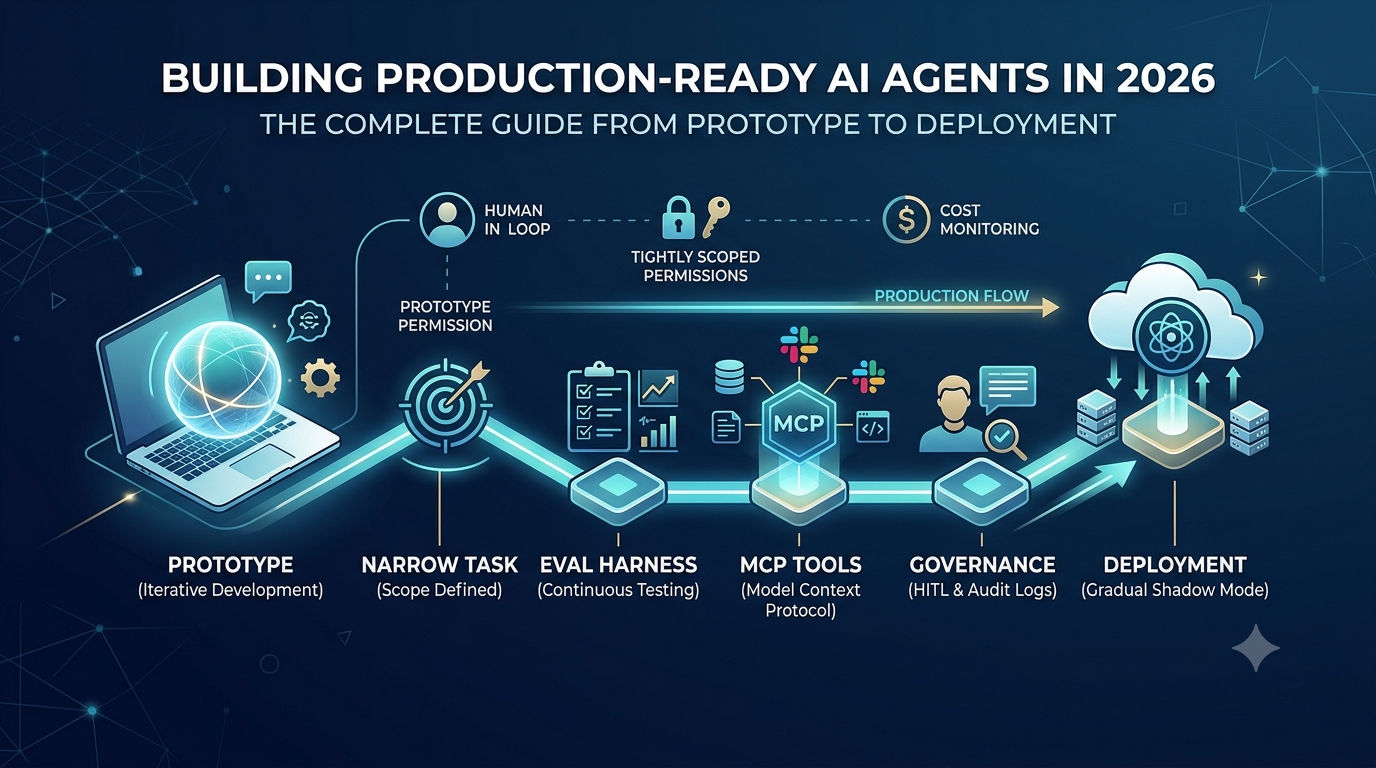
You don't rip out LangChain overnight. Smart teams migrate incrementally. The key is understanding that MCP isn't just a tool upgrade—it's a shift in how agents are built. True AI agents now operate with autonomous tool execution, and MCP is the protocol enabling that at scale.
Phase 1: Run MCP Servers Alongside LangChain
Langchain-mcp-adapters bridge both worlds by allowing you to use MCP servers as LangChain tools, giving you LangChain's orchestration with MCP's tool portability. This lets you introduce MCP tooling without rewriting your agent logic.
1from langchain_mcp import MCPToolkit
2
3# Load MCP servers as LangChain tools
4mcp_toolkit = MCPToolkit(
5    mcp_servers=[
6        {"uri": "stdio://node /path/to/mcp-server.js"}
7    ]
8)
9
10tools = mcp_toolkit.get_tools()
11agent = initialize_agent(tools=tools, ...)
Phase 2: Migrate Agent Logic to Native Calls
Once your tools work via MCP, rewrite the agent loop to call Claude directly instead of going through LangChain. This is usually a matter of hours, not days.
Phase 3: Deprecate Framework Abstractions
Turn off memory management, remove custom tool wrappers, eliminate prompt templates that the framework provides. Each piece you remove is less code to maintain and fewer tokens to burn.
Phase 4: Full Native MCP
You're now running lightweight, model-agnostic tool integration. Adding new tools doesn't require framework updates. Switching models requires changing one line.
The Honest Trade-offs
MCP wins on simplicity, control, and efficiency. But it doesn't win everywhere.
Because agents act autonomously with MCP tool access, they can cause problems if given the wrong permissions or unclear instructions. Understanding the governance implications of autonomous agents is critical—real security comes from giving the agent only the minimum permissions it truly needs.
- Multi-step reasoning with complex state management (LangGraph handles this better than vanilla MCP)
- RAG pipelines (document loading, chunking, vector store integration is built-in)
- Rapid prototyping when you just want something working fast
MCP wins for:
- Tool integration at scale
- Production reliability
- Multi-model deployments
- Teams that need transparency in execution
Most production systems combine MCP for tool integration, LangChain for orchestration, and CrewAI for multi-agent coordination. The frameworks aren't mutually exclusive. But the trend is clear: teams are moving tool logic to MCP and keeping orchestration lightweight.
For teams exploring lightweight agent frameworks, understanding which modern tools support native MCP connections matters for long-term maintainability. Many modern productivity tools are adding agent capabilities, which means the tooling around agents is maturing rapidly.
Why This Matters Right Now
In December 2025, Anthropic donated the MCP to the Agentic AI Foundation (AAIF), a directed fund under the Linux Foundation, co-founded by Anthropic, Block and OpenAI. This signals something important: MCP is becoming infrastructure, not a vendor feature.
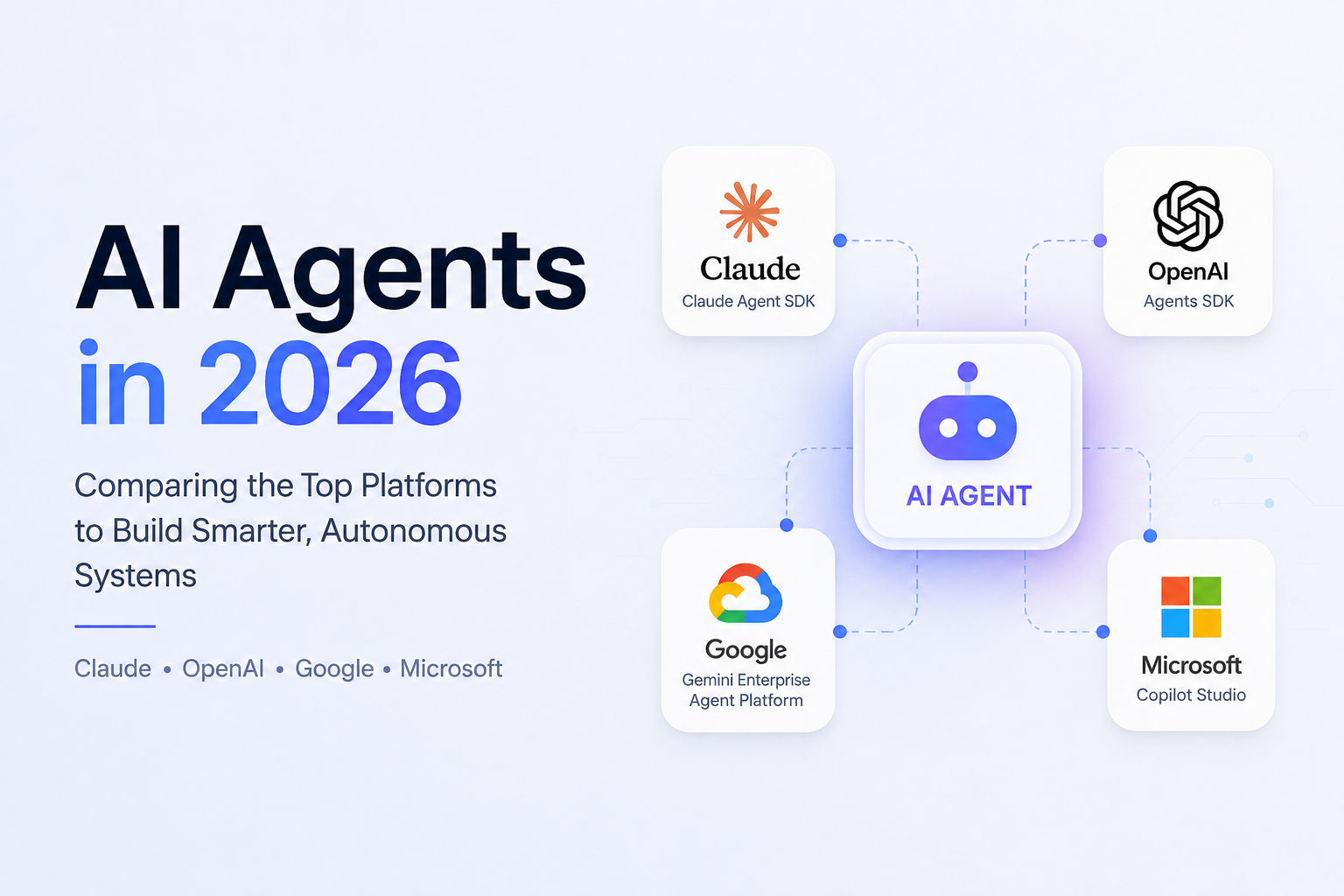
When Anthropic, OpenAI, and Google all back the same protocol, the market has decided. This coalescing of significant AI leaders—Anthropic, OpenAI, Google and Microsoft—caused MCP to evolve from a vendor-led spec into common infrastructure and essentially ensured MCP would continue to dominate the conversation about AI connectivity.
For teams building in 2026, the decision is simpler than it was a year ago. LangChain will remain useful for orchestration and RAG. But for tool integration, context management, and agent reliability, MCP is the architecture that's winning.
The great migration isn't over. But if you're still building with LangChain for everything, you're swimming upstream. The protocol has shifted. The ecosystem has moved. The question now is how quickly your team can follow.
Most People Asked
CS student and builder writing about tech, startups, AI, and productivity. Built a SaaS that didn't ship — walked away with real product experience instead. Sharing everything learned along the way.